
Every civil engineering and special foundations project comes with its own technical, logistical and environmental challenges. Liquid spoil, restricted working areas, increasing disposal requirements and demanding production schedules are now part of everyday site operations. The difference between a well-managed project and a difficult one often lies in the ability to anticipate these constraints before they impact productivity, safety and logistics.
Construction site constraints are becoming increasingly challenging
Modern construction, civil engineering and special foundations projects are carried out in increasingly complex environments. Urban developments, limited working areas and tight deadlines leave little room for error.
At the same time, contractors must deal with a growing number of operational challenges, including spoil management, restricted site access, truck logistics, operator safety, environmental requirements and increasingly demanding acceptance criteria at disposal and treatment facilities.
These constraints are no longer exceptional. They have become an integral part of everyday project management.
Anticipation makes the difference
Every construction project faces constraints.
What differentiates successful projects is not the absence of challenges, but the ability to anticipate them before they affect productivity.
Planning excavation volumes, organising transport logistics, selecting the appropriate spoil treatment method and preparing material handling operations all contribute to maintaining production schedules while reducing operational risks.
This proactive approach also improves site safety and facilitates coordination between contractors, subcontractors and project stakeholders.
Spoil management has become a strategic issue
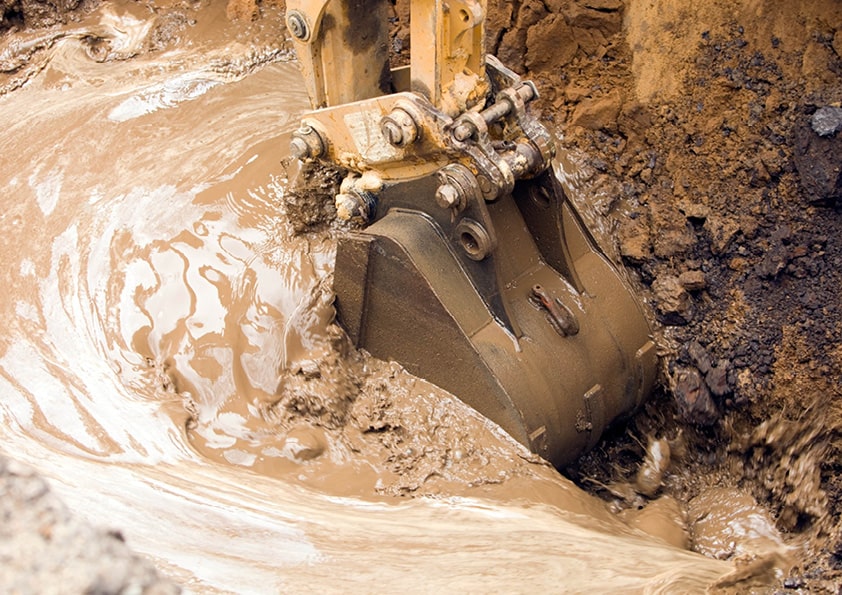
Among all the challenges encountered on special foundations projects, spoil management has become one of the most critical.
Diaphragm walls, bored piles, tunnelling, jet grouting and other ground engineering techniques generate large volumes of excavated materials with very high moisture content. These wet or liquid spoils can complicate loading operations, transportation and final disposal.
At the same time, disposal and treatment facilities are applying increasingly stringent acceptance criteria, making proper spoil conditioning more important than ever.
Anticipating these constraints allows contractors to improve logistics, maintain production rates and simplify the overall management of excavated materials.
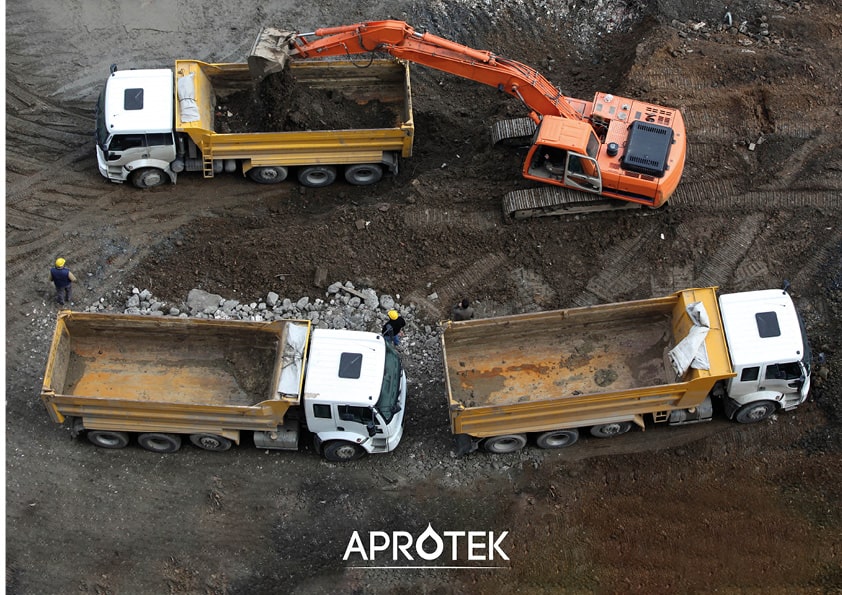
APROTEK helps contractors anticipate field challenges
At APROTEK, we believe our role goes far beyond supplying products.
Our expertise lies in helping contractors analyse site constraints and identify the most appropriate solutions for their projects.
With APROMUD®, our super drying agent, contractors can rapidly improve sludge dewatering, simplify spoil management and facilitate material handling, loading and transportation.
The treatment is carried out directly on site and integrates seamlessly into existing construction processes without disrupting daily operations.
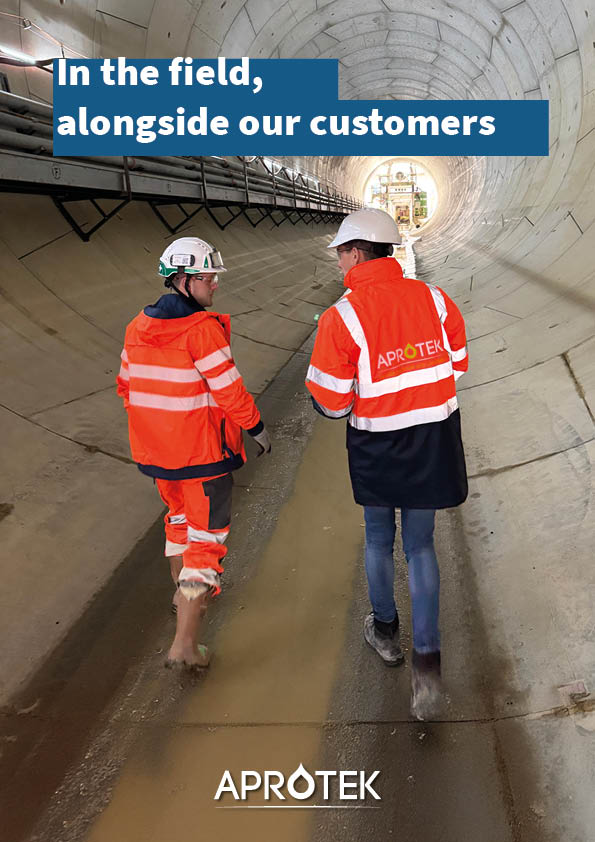
A smarter approach to performance, safety and sustainability
Construction and infrastructure projects continue to evolve, while environmental expectations become increasingly demanding.
In this context, anticipating site constraints has become a major competitive advantage. It helps preserve productivity, improve safety, optimise logistics and simplify the management of excavated materials.
This philosophy drives the development of every APROTEK solution.
Through APROMUD®, we help civil engineering and special foundations contractors transform operational challenges into opportunities for greater efficiency, while supporting more sustainable construction practices and responsible spoil management.