In civil engineering and special foundations projects, the management of cut-and-fill from diaphragm walls presents a real operational challenge. Urban construction sites, restricted access, highly moist excavated material, logistical constraints and environmental requirements now call for ever more effective solutions for dewatering slurry. Discover the various technologies available and why superabsorbent polymers offer an innovative alternative for optimising spoil management on construction and infrastructure sites.
The constraints associated with liquid spoil from diaphragm walls
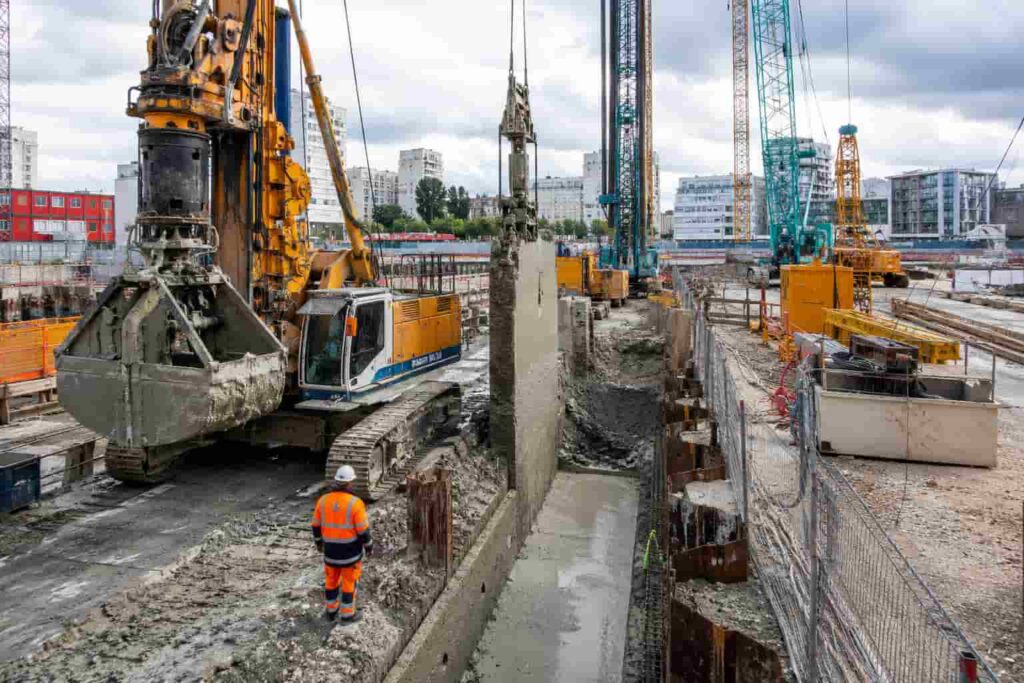
Diaphragm wall works are essential for the construction of many infrastructure projects: high-rise buildings, underground car parks, engineering structures, underground stations, reservoirs and hydraulic structures. These operations generate large volumes of slurry and excavated material on a daily basis, which often have a very high water content.
On civil engineering sites, contractors face increasingly stringent constraints. Available workspaces are limited, particularly in urban areas, whilst production rates must be maintained in order to meet project deadlines. Excavated material must be quickly loaded, transported and then taken to a reception centre, which is sometimes located several tens of kilometres from the site.
When excavated material becomes too wet, handling it becomes more difficult, loading operations lose efficiency and logistical challenges increase. Optimising the management of excavated material therefore becomes a key driver of performance for construction companies.
The main solutions for dewatering construction site sludge
Several technologies are now available to improve sludge dewatering and facilitate the management of excavated materials.
Mechanical solutions, such as filter presses, centrifuges or geotubes, offer efficient dewatering but generally require a substantial on-site installation. They take up a considerable amount of floor space, require specialised equipment, consume energy and often involve high rental or operating costs. They are mainly used for permanent installations or very large volumes where site organisation permits.
Physico-chemical solutions, on the other hand, involve adding reagents directly to the sludge. The best-known of these are lime, cement-based hydraulic binders and superabsorbent polymers. Their aim is to rapidly reduce the water content of the materials in order to improve their mechanical properties, facilitate their handling and ensure their safe transport.
Superabsorbent polymers: an innovative technology for the treatment of excavated material
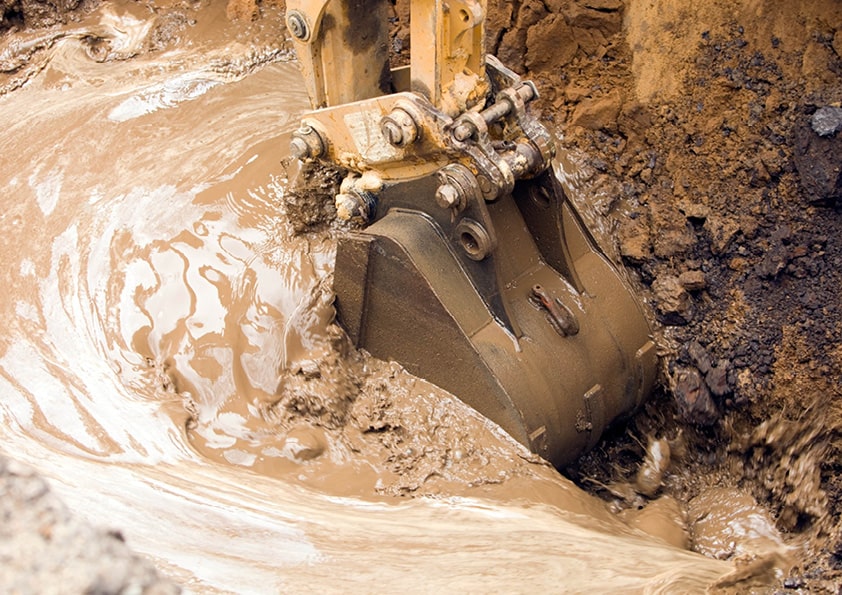
Superabsorbent polymers are now a technology particularly well-suited to the demands of special foundations projects. The principle is simple: they rapidly absorb the free water present in the slurry, transforming a liquid material into a stable, shovelable and easily handled material.
Unlike mechanical solutions, this technology requires no heavy equipment or additional space on site. Treatment takes place directly at the point where the excavated material is produced, thereby minimising handling and simplifying the organisation of the works.
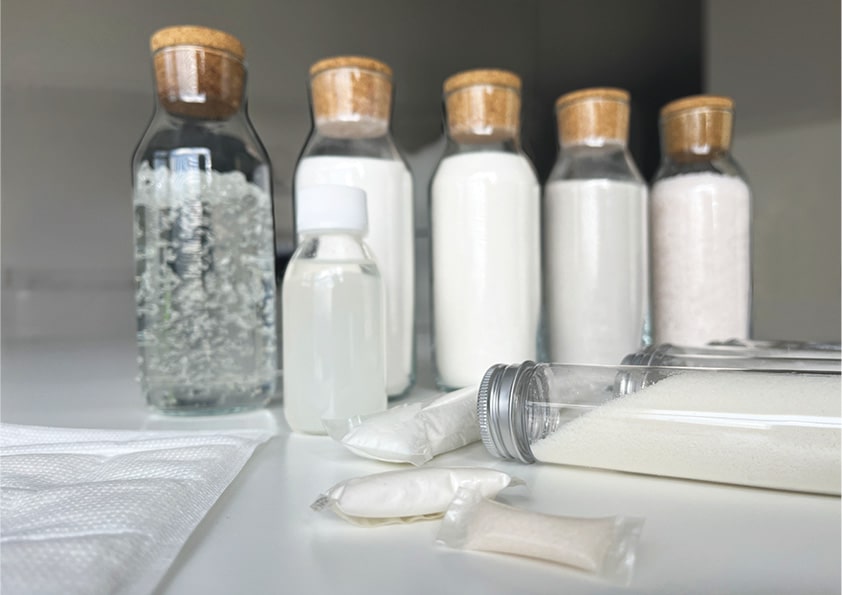
It is based on this technology that APROTEK has developed APROMUD®, a super-drying agent specially designed for the treatment of construction slurry and the management of excavated material from civil engineering works, infrastructure projects and diaphragm walls. Thanks to its rapid action and low dosage, APROMUD® immediately improves handling, loading and transport conditions whilst integrating easily into existing processes.
APROMUD®: effectiveness, safety and ease of use
The effectiveness of a dewatering solution is not measured solely by its ability to absorb water. It must also meet the requirements for operator safety, the productivity of construction companies and cost control.
APROMUD® meets these objectives thanks to a number of technical features:
- Rapid drying in under 15 minutes;
- Low dosage, generally less than 1 per cent of the volume treated;
- Non-irritating, non-corrosive and non-exothermic product for safe use;
- Immediate integration into existing working methods without any changes to site organisation;
- Optimisation of handling, loading, transport and management of excavated material.
This approach makes it possible to maintain production rates whilst improving the safety and efficiency of operations.
A low-carbon solution supporting the circular economy
Beyond technical performance, construction companies are now seeking solutions that are consistent with their environmental commitments.
APROMUD® is fully in line with this approach. The product is manufactured from raw materials sourced entirely from recycling streams, thereby contributing to the development of the circular economy. When used with mineral sludge, it remains 100 per cent inert, which allows the original method of recovery or disposal of excavated materials to be maintained without altering their nature.
This approach minimises environmental impacts whilst promoting more sustainable management of construction waste. It also helps to reduce the overall carbon footprint of operations by optimising transport and logistics flows.
This innovation has, in fact, been recognised by the Solar Impulse Efficient Solution label, which recognises technologies that combine economic performance with environmental benefits.
Optimising the management of diaphragm wall spoil in a sustainable manner
Faced with growing constraints in civil engineering, construction, infrastructure and special foundations projects, optimising the management of excavated material is becoming a key factor in competitiveness.
Thanks to its immediate effectiveness, low dosage, ease of use and low-carbon approach, APROMUD® is a solution particularly well-suited to dewatering sludge, managing excavated material and improving operational performance on diaphragm wall projects.
Would you like to find out more? Our teams can assist you in assessing your project and provide you with concrete case studies from special foundation projects in France and internationally.