In the construction and civil engineering sectors, managing excavated materials represents a major environmental, economic and logistical challenge. With growing requirements for traceability, waste reduction and natural resource conservation, industry professionals are increasingly encouraged to rethink their practices. From circular economy principles and excavated material recovery to innovative slurry treatment solutions, new approaches are helping optimise construction site operations while reducing their environmental impact.
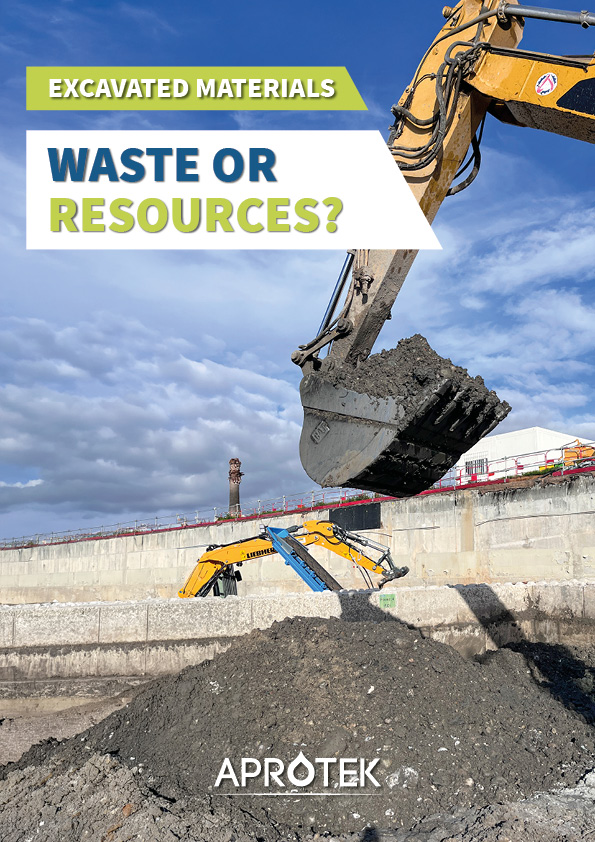
Managing Excavated Materials: A Key Environmental Challenge for Construction Sites
Every year, construction and civil engineering activities generate significant volumes of excavated materials, soil and construction slurry. Managing these materials is a daily challenge for contractors, particularly during earthworks, drilling operations, special foundations and underground construction projects.
When these materials contain high levels of water, handling and disposal become particularly complex. Their liquid or pasty consistency can complicate truck loading, slow down operations and increase logistical constraints.
In the context of the ecological transition, the objective is no longer simply to remove these materials from construction sites. It is also essential to better characterise them, optimise their treatment and identify opportunities for reuse or recovery.
This evolution fully aligns with the principles of the circular economy in the construction and civil engineering sectors.
Circular Economy in Construction: Towards Better Recovery of Excavated Materials
The circular management of construction materials is becoming increasingly important in the environmental strategies adopted by the construction industry.
In October 2026, Cerema highlighted its Diag’TP tool, designed to help industry professionals improve the management, traceability and recovery of materials and waste generated by construction activities.
This initiative reflects a significant shift: excavated materials should no longer automatically be considered waste to be disposed of, but rather materials whose potential for reuse or recovery deserves to be assessed.
Several approaches can support this transformation:
- Improve the characterisation and traceability of excavated materials.
- Encourage reuse or recovery whenever material properties and regulations allow.
- Optimise handling, loading and transportation operations.
- Reduce unnecessary transport movements and logistical constraints.
- Develop treatment solutions adapted to the characteristics of each material.
Implementing these best practices contributes to more responsible resource management and better control of the environmental footprint of construction projects.

Construction Slurry: A Technical Challenge for Civil Engineering Professionals
Among excavated materials, liquid and pasty slurries present particularly significant operational challenges.
Generated during drilling, tunnelling and diaphragm wall construction, these slurries can contain high proportions of water. Their low consistency can make handling difficult using conventional construction equipment.
Transporting these materials may also require specific precautions to prevent leakage and ensure safe operations.
For civil engineering contractors, these constraints can lead to reduced productivity, additional costs and increased logistical requirements.
Slurry solidification and conditioning therefore represent valuable solutions for improving material management directly on construction sites.
APROMUD®: An Innovative Solution for Construction Slurry Management
At APROTEK, we develop innovative formulations designed to address the practical challenges faced by professionals in the environmental and construction sectors.
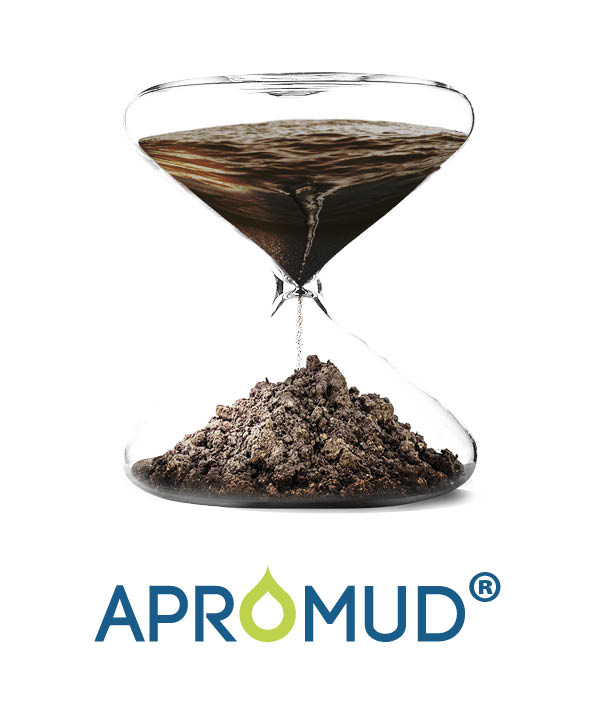
Our APROMUD® solution rapidly transforms liquid or pasty slurries into shovelable materials through an advanced super-drying technology.
With a dosage generally below 1% of the slurry mass, depending on its characteristics, APROMUD® acts within minutes to modify material consistency and facilitate handling.
This technology offers several operational advantages:
- Easier handling: treated slurries become easier to manage using conventional construction equipment.
- Optimised loading: their modified consistency simplifies material recovery and truck loading operations.
- Improved transport management: slurry conditioning helps reduce the risk of leakage during logistical operations.
- Rapid on-site treatment: the process can be carried out directly on construction sites without requiring lengthy dewatering stages.
By facilitating slurry management, APROMUD® helps improve operational efficiency and can contribute to reducing certain environmental constraints associated with material removal.
However, treatment alone does not guarantee material recovery or reuse. These possibilities depend on material composition, regulatory compliance and the availability of suitable recovery facilities.
Reducing the Environmental Impact of Construction Sites Through Adapted Solutions
The environmental transition of the construction and civil engineering sectors relies on a combination of best practices, technical innovation and optimised resource management.
Slurry conditioning contributes to this approach by facilitating essential stages of material handling and management.
By improving handling operations and optimising logistics, contractors can achieve productivity gains while seeking to reduce the impacts associated with transportation and construction site organisation.
However, environmental benefits must be assessed according to the specific conditions of each project, including treated volumes, transportation distances and available alternative solutions.
Beyond material treatment, this approach contributes to a broader reflection on the environmental performance of construction sites and the role of innovation in civil engineering.
Turning Excavated Materials into Resources for Tomorrow
Waste or resources? The answer primarily depends on the nature and quality of excavated materials, as well as the opportunities available for their reuse or recovery.
In an industry facing growing sustainability challenges, every stage of excavated material management represents an opportunity for improvement.
At APROTEK, we believe that innovation should combine technical performance, operational efficiency and environmental responsibility.
Through our formulation expertise and solutions such as APROMUD®, we support industry professionals in optimising the management of construction slurry and other difficult-to-handle materials.
Our ambition: to contribute to more efficient, more responsible construction sites that are better prepared to meet tomorrow’s environmental challenges.