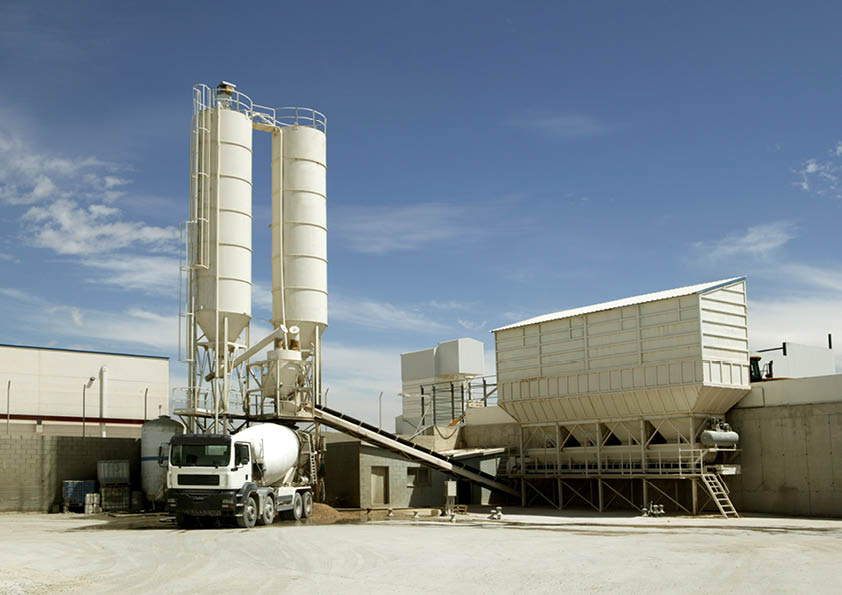
Concrete plants are at the heart of the production of materials essential to the construction industry. But behind this vital activity lies a recurring problem: the management of cement slurry and sludge generated by washwater. Between rapid accumulation, cleaning constraints, and environmental concerns, sludge treatment has become a significant operational challenge. Optimizing sludge dewatering and handling is now a key factor in improving the overall performance of these facilities.
Challenges at Concrete Plants and Settling Ponds
At a concrete plant, settling ponds play a vital role in the recycling of wash water. They collect water from the mixer, trucks, and sometimes concrete returns. This water, laden with fine particles, gradually forms sediments, debris, and slurry that accumulate at the bottom.
This sludge must be regularly dredged and then stored to ensure the proper functioning of the basins and the recycling process. This dredging is often time-consuming, costly, and complex, particularly due to the liquid nature of the sludge, which complicates its handling, transport, and treatment.
Existing Solutions for Slurry Management
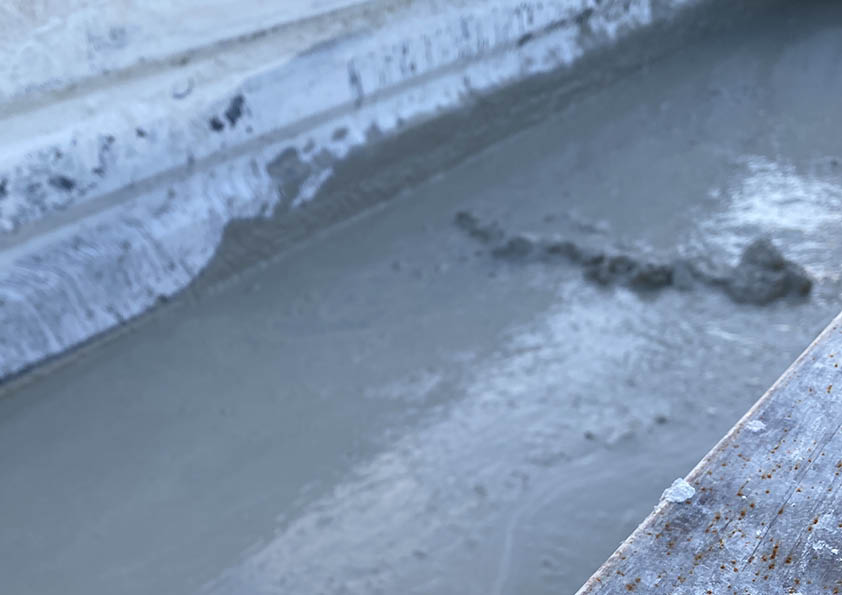
Several methods are used to manage slurry and treat sludge at concrete plants. Conventional mechanical removal remains the most common solution, requiring the use of machinery and a drainage phase prior to disposal.
Other approaches include the use of filters, additional settling tanks, or improved settling systems. Some plants also opt for natural drying or mixing with absorbent materials. However, these methods often have limitations in terms of time, cost, efficiency, or environmental impact.
It is in this context that drying agents stand out as an innovative solution for sludge conditioning.
APROMUD®: An Innovative Solution for Sludge Dewatering
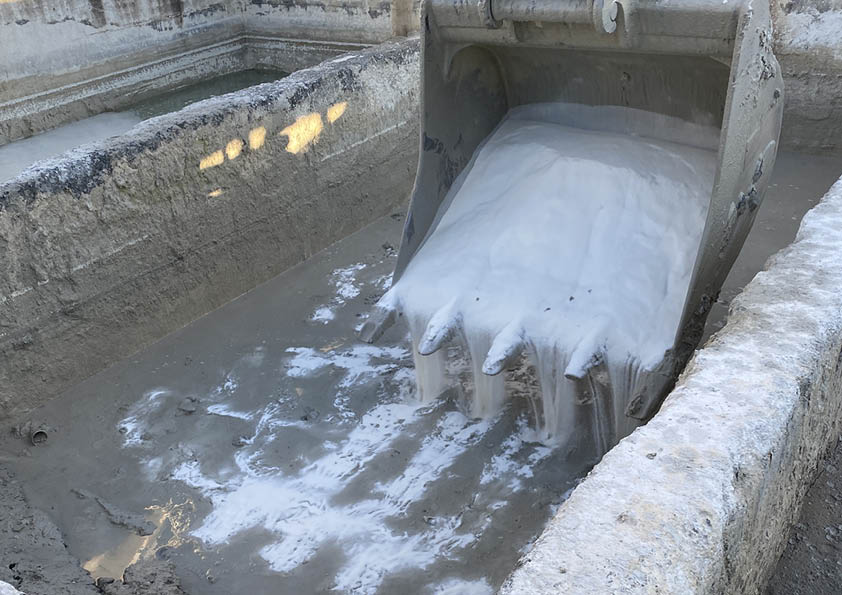
APROMUD® is a dewatering agent specifically designed to address slurry management challenges at concrete plants. Based on organic polymers, it rapidly transforms liquid slurry into a solid, pelletizable material.
It works by encapsulating the free water contained in the sludge, making it immediately manageable. In just a few minutes, cleaning operations become simpler, faster, and more efficient.
This type of solution allows for independent management of basin cleaning, while optimizing sludge treatment and recycling operations.
How to Apply a Slurry Stabilizer Like APROMUD®
Using a super slurry stabilizer is quick and easy, making it simple to incorporate into the daily operations of concrete plants.
- Spread the product over the surface of the slurry
- Mix the product in mechanically, then wait about 15 minutes
- Remove the solidified slurry, which is now shovelable
With a dosage typically ranging from 0.5% to 1.5%, the product acts quickly after mixing to transform liquid slurry into a manageable material.
Immediate Operational Benefits
Using a drying agent like APROMUD® delivers tangible benefits on-site. Operators benefit from a simple, effective, and safe solution tailored to the demands of concrete plants.
The product is non-powdery, which improves safety during handling. Its effectiveness is nearly immediate, with an action time of approximately 15 minutes. The low dosage also helps limit costs while maximizing performance.
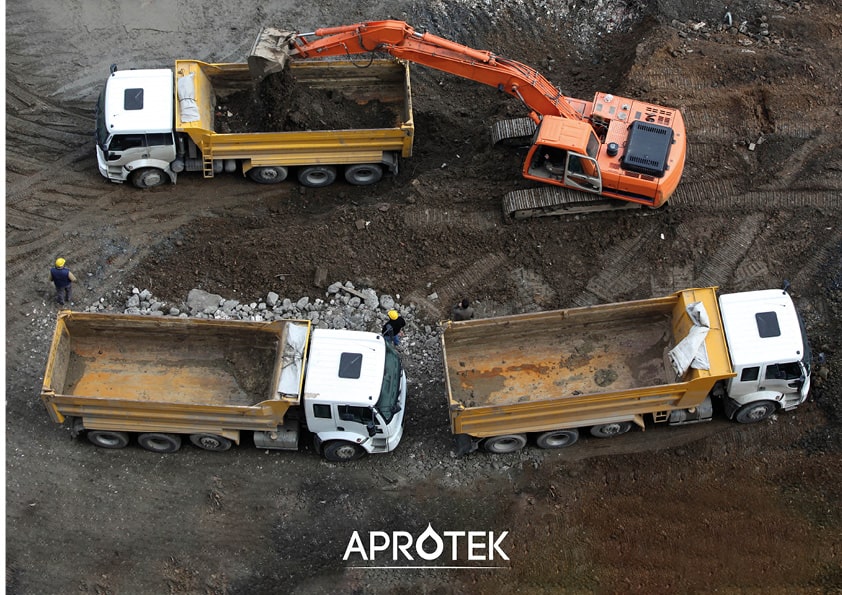
Optimizing load volumes is a major advantage, significantly reducing transport trips. The solidified sludge holds together in piles, prevents runoff, and ensures cleaner job sites. This also improves its acceptance at treatment facilities.
Minimized Environmental Impact
Sludge dewatering must not come at the expense of the environment. That is why modern solutions like APROMUD® are designed to be inert when applied to mineral sludge.
The product does not alter the sludge’s original chemical composition, making it easier to integrate into existing treatment processes. This feature improves its acceptability at specialized facilities and contributes to better overall waste management.
In line with the circular economy, this approach promotes recycling and more responsible resource management.
A Certified and Recognized Solution
APROMUD® is also part of a sustainable development initiative. The solution has been certified as an “Efficient Solution” by the Solar Impulse Foundation, a recognized certification that promotes clean and cost-effective innovations.
This recognition confirms the relevance of this type of technology in addressing today’s challenges of ecological transition and industrial process optimization.
In conclusion
Managing slurry and treating sludge at concrete plants is a major challenge for operators. Given operational constraints, costs, and environmental requirements, it is essential to adopt effective and sustainable solutions.
Drying agents such as APROMUD® provide a practical solution by simplifying the cleaning of slurry pits, optimizing sludge conditioning, and improving overall sludge management.
We also offer solutions to facilitate the management and recovery of fresh concrete returns at the plant, or for any type of sludge, including contaminated sludge.