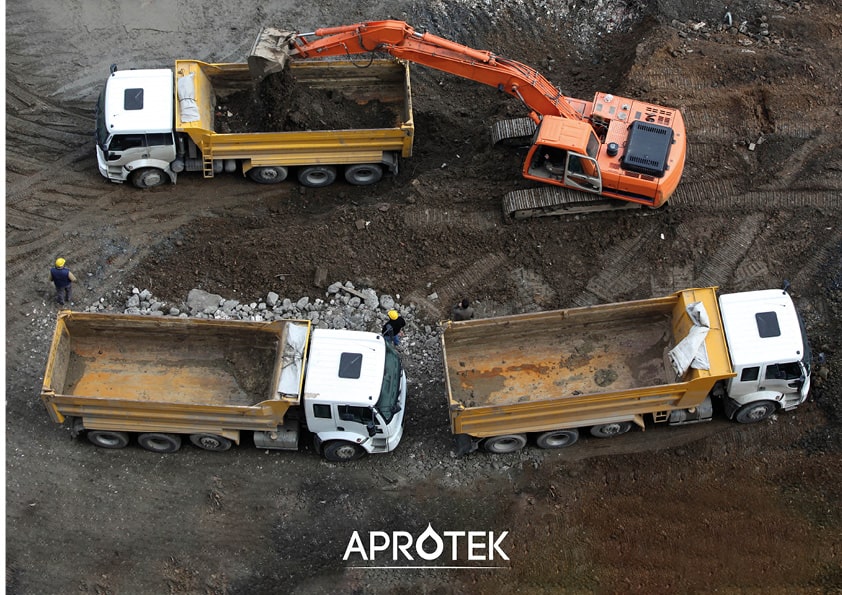
Every construction site generates excavated material… but managing it can’t be done on the fly
In civil engineering as well as in industry, the management of excavated material and slurry has become a major technical, logistical, and environmental challenge. Today, most earthwork, drilling, or industrial processing activities generate large volumes of excavated material that must be packaged, transported, recycled, or disposed of through appropriate channels.
Whether it involves construction work, special foundations, diaphragm walls, tunnel boring machines, geotechnical drilling, or geothermal projects, the challenges on-site are often the same: materials that are too liquid, unstable, or difficult to handle.
These challenges also apply to biological sludge from wastewater treatment plants, concrete slurry at batching plants, industrial effluents, sludge from settling ponds in mines and quarries, dredging of highway retention ponds, and stormwater retention lagoons.
In light of increasing regulatory requirements and goals for maximum recycling, sludge dewatering and sludge drying have become essential steps to ensure site safety, minimize environmental impacts, and optimize disposal costs.
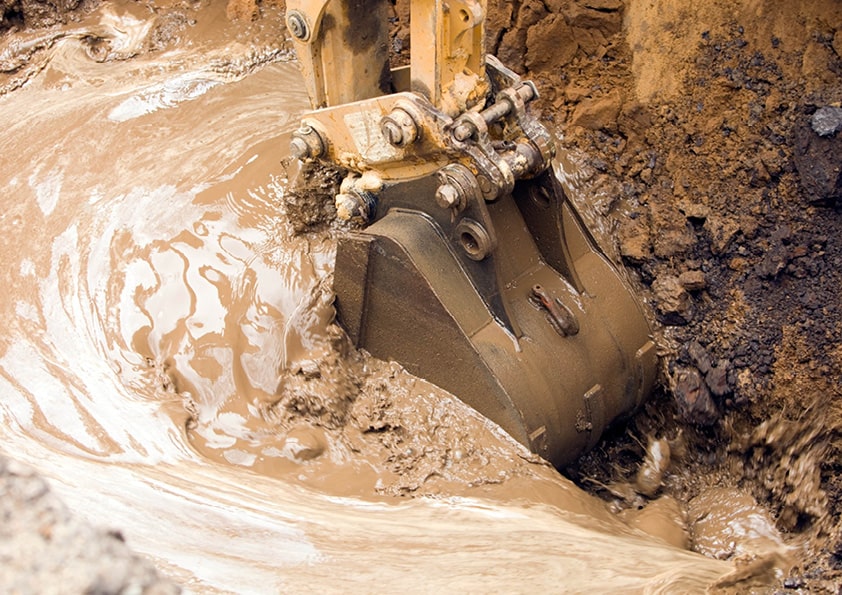
On-site challenges: when mud slows down construction progress
Sur le terrain, les entreprises sont confrontées à une réalité simple : les boues et déblais humides compliquent fortement l’organisation des chantiers.
In their initial state, these materials are often too liquid to be handled properly. This has numerous consequences: difficult loading, transport that is impossible without spillage, mess on the roads, material instability, wasted time, and slower removal rates.
Above all, these wet materials are very difficult to accept at recycling facilities or in certain treatment streams. Waste that is too liquid quickly becomes a logistical and economic problem.
In tunnel boring operations, drilling operations, pond dredging, or special foundation work, this issue of spoil management can quickly become critical if no effective conditioning solution is implemented.
The goal is therefore to make the materials quickly manageable, transportable, and compatible with treatment or recycling streams.
APROMUD®: a high-performance solution for dewatering sludge and excavated materials
To address these challenges, APROTEK has developed APROMUD®, a line of super-drying agents designed for the rapid conditioning of sludge, spoil, and moist excavated materials.
The goal is simple: to transform a liquid or unstable material into a material that can be handled, transported, and used in just a few minutes.
APROMUD® is effective on a wide variety of materials, including tunnel boring machine cuttings, drilling mud, geothermal sludge, mineral sludge, organic sludge, concrete slurry, industrial effluents, contaminated sludge, biological sludge, and sediments from ponds and lagoons.
Regardless of the type of material to be treated, this product line offers a fast and reliable solution.
The formulations have been designed to adapt to various job site conditions. The product is 100% inert on mineral sludge and 100% biodegradable on organic sludge in accordance with standard NF EN 14995.
This versatility allows APROMUD® to be used on civil engineering sites as well as in industrial or environmental applications.
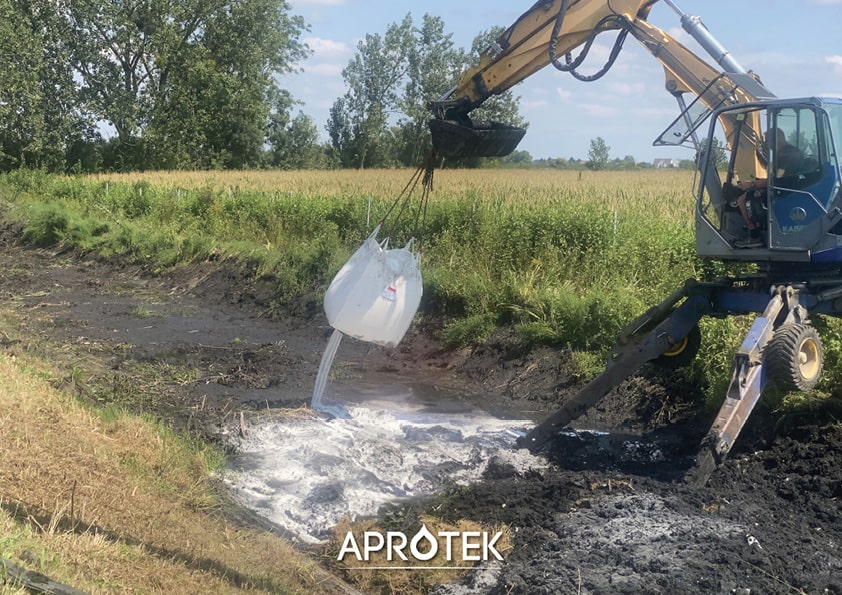
The benefits of APROMUD® for field professionals
Sécurité : une application simple et sans danger
Operator safety and clean job sites are top priorities.
Unlike some traditional solutions, APROMUD® is easy to apply, non-powdery, and does not generate significant dust. The product does not cause any exothermic reactions and therefore poses no risk of burns to crews.
After treatment, the materials quickly become transportable without dripping, significantly reducing mess on the road and disturbances around the construction site.
The result: a cleaner, safer, and easier-to-manage construction site on a day-to-day basis.
Efficiency: Rapid drying with low dosage
Operational efficiency is one of the solution’s key advantages.
Depending on the materials being treated, dosages remain very low, ranging from just 2 to 12 kg/m³.
After mixing, the sludge begins to dry almost immediately. It takes about 15 minutes to produce a material that is conditioned, manageable, and ready for removal.
This speed allows construction schedules to be maintained without downtime for crews or equipment.
Cost Reduction: Less Transportation, Higher Productivity
Dehydrated sludge also means optimized logistics.
Thanks to improved packaging, loading is easier, trucks can be filled more efficiently, and the number of trips is significantly reduced. This helps lower transportation costs while minimizing energy consumption.
The absence of waiting time for sludge dewatering also helps maintain site productivity and avoid operational interruptions.
A Product Neutral to Treatment Processes
Another key advantage: APROMUD® does not alter the chemical composition of the treated sludge.
The product does not change the final disposal method, does not disrupt recovery processes, and does not alter the material’s chemical properties.
Companies thus retain their treatment or recycling options without any additional constraints.
Cleaner construction sites and a responsible approach to the environment
Today, construction sites and industrial processes must meet increasingly stringent environmental requirements.
Reducing pollution, minimizing unnecessary transportation, maintaining clean work areas, and optimizing recycling streams: every step counts.
In line with this approach, APROMUD® stands out as a true low-carbon alternative.
The active ingredient used in the solution comes from recycling streams and is fully reused, in line with the principles of the circular economy.
This approach helps limit the use of virgin resources, reduce the environmental footprint of operations, and promote more sustainable practices on construction sites.
This initiative has also been recognized by the Solar Impulse Foundation, which awarded the solution the “Efficient Solution” label, recognizing its technical performance, economic efficiency, and environmental sustainability.
Key Takeaways
- Sludge dewatering has become a major challenge for construction sites and industrial operations.
- Wet excavated materials significantly complicate the transportation, recycling, and management of spoil.
- APROMUD® enables rapid treatment of sludge and liquid or unstable spoil.
- The product is effective on both mineral and organic sludge.
- Dosages are low, and dewatering is nearly immediate.
- APROMUD® improves safety and cleanliness on construction sites and reduces logistics costs.
- The solution is part of an environmental and circular economy approach.
APROMUD®: A Practical Solution to Today’s Construction Challenges
Whether it involves tunnels, special foundations, wastewater treatment plants, drilling, or industrial operations, the challenge is often the same: quickly managing wet or liquid excavated materials while keeping costs and environmental impact under control.
With APROMUD®, companies have a fast, safe, cost-effective solution suitable for a wide variety of construction sites.
Because ultimately, regardless of the specific trade… sludge management challenges often remain the same on-site.